About
Built for one kitchen.
Allison's Kitchen is a family cookbook that stays together — the recipes you actually make, the weeks you actually cook, and the people who keep asking you for both.
Who it's for
It was a gift before it was a product.
it started on a sunday morning, the two of us planning the week's dinners. “wasn't there a dinner we really liked? what was that recipe?” the pen and paper came out — monday night this, tuesday night that — and then, for each one: what do we need, what do we already have, the grocery run. and all week, the same questions across a half-dozen apps. what did we agree on for thursday? did the kids like that one?
what we had before this was screenshots. a notes app full of entries that just said the name of a dish, and then you'd google it and guess which version was ours. lots of notes, lots of systems, nothing connected.
allison is my wife — cooking is her first love, and she's the one family and friends already ask: what do you make? what's the good appetizer? so it's her kitchen, and it's named for her.
what we wanted was one place for how a family does food. the plan for the week, the recipes worth keeping, what the kids actually like, what we haven't had in a while, what we made last month that we loved. those are the conversations this application exists to hold.
What it is
Save, plan, shop, cook, remember.
Send it a link, a video, a screenshot, or a photo of a handwritten card and it lands in the cookbook as a proper recipe — ingredients parsed, steps in order, the source credited. Plan a week that looks like your week, repeat nights and takeout included. The grocery list writes itself and updates live while two people shop different aisles. Cook mode is big type you can read across a kitchen, voice control for messy hands, and timers that start themselves.
And then the part that outlasts all of it: the cookbook keeps a record. Every dinner logged is a line in a family's history — the dish, the night, who cooked it, who asked for it again.

What we're convinced of
An heirloom, not a filing cabinet.
A cookbook should be worth more the longer you keep it. So this one remembers: how many times you've made a thing, who at the table loves it, where it came from, and the night you first cooked it. Recipes are the easy part. The remembering is the point.
Invite-only, by design.
There is no open signup. You get a kitchen because someone already at a table sent you a link. Small rooms behave differently than big ones, and a kitchen is a household — not an audience.
No ads inside. Not now, not later.
Members never see advertising in this app. No data brokers, no tracking you across sites and apps. The first 25 kitchens are free for life. After that a kitchen pays one price for the whole household, never per person, and your family's memories are never what sits behind it: the recipes you keep, the reactions you log, the story behind a dish.
Build log
What shipped, in order.
The honest version. Nothing on this list is a plan. It either shipped or it isn't here.
July 21
The recipe tin
First screens. The opening direction got scrapped the same day for something plainer — a tin, a notebook, serif type on cream paper. What landed in that first stretch is most of the spine: recipes and a library, the week grid, the grocery list, cook mode with voice and self-starting timers, and the first attempts at pulling a recipe out of a link.
July 25
Imports that hold up
Links, screenshots, photos of handwritten cards, and a spreadsheet of the back catalog — each one graded against a fixed set of real recipes until extraction stopped being a coin flip. Then accounts and households, which is the day it stopped being one person's app.
July 26
Recipes that can leave the house
Public recipe pages, forking a recipe into your own kitchen with attribution intact, following other kitchens, comments. Also the day a decorative script typeface and a drawer of flourishes were deleted and the whole thing went editorial.
July 27
Allison's Kitchen
It was called Stuart Pantry until this morning. Same week: an iOS shell, a share sheet that catches a recipe from anywhere else on the phone, and a week plan that finally admits leftovers and takeout are real dinners.
July 28
The Kitchen Page
A front door for a household — its cookbook, what it's been cooking lately, who cooks there — with layered controls so a family decides exactly how much of that is visible, and a kill switch that takes effect immediately. Kids' names and reactions are never on it. First TestFlight build went out the same week.
July 31
The boring, load-bearing week
Every query in the app audited so it can only ever see one household's data, with a tripwire in CI so that can't quietly regress. Nightly encrypted backups. A load test up to a hundred people at once. None of this is visible. All of it is why the rest is allowed to exist.
August 1
Second-chance design
Timers that survive a locked phone. A grocery list two people can edit at the same time without stepping on each other. Undo on the things you'd panic about. Imports that heal instead of dead-ending. The premium part of an app is usually what it does on your worst day.
August 1
The plates
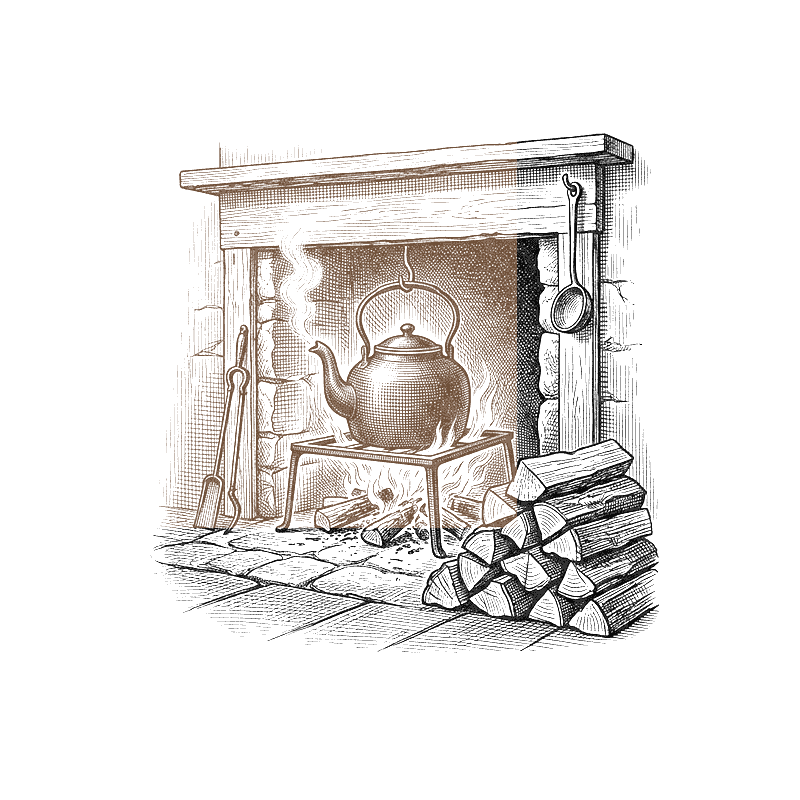
The engravings on this page. Nineteenth-century cookbook plates — fine hatching, one umber ink, no cuteness — drawn to a single strict prompt, reduced to one ink so they print onto any of the app's papers, then repaired by hand where the press left a frame it shouldn't have. They appear only where there is no food to show. An engraving and a photograph never share a screen.

Built for one family's kitchen — and now, maybe, yours.
It's invite-only, like a good dinner party. You'll need a link from someone at the table.
No invite yet? Peek into a real kitchen and ask for a seat.